Zanskar and Leh on a Motorcycle: Why This Himalayan Loop Is Worth the Ride
A Zanskar motorcycle tour is the Himalayan ride that still surprises people who think they have already seen Ladakh. Leh is the gateway. Padum is the reason to continue.
A Zanskar motorcycle tour is what you ride when Leh, Nubra and Pangong are no longer enough. Padum and the valleys around it are a deeper, quieter Himalaya, and they need their own days. Hardev Motors runs that expedition as Divine Zanskar + Leh.
The published departure starts from Manali, runs about fifteen days and fourteen nights, sits on the 2026 calendar from May through August, and is listed from 2,400 dollars for the rider with a Royal Enfield Himalayan. This article explains why those extra days exist, what the riding is like, and how to decide whether this is your year for a Leh Zanskar bike trip or whether a straighter Ladakh tour is the honest choice.
Where Zanskar sits
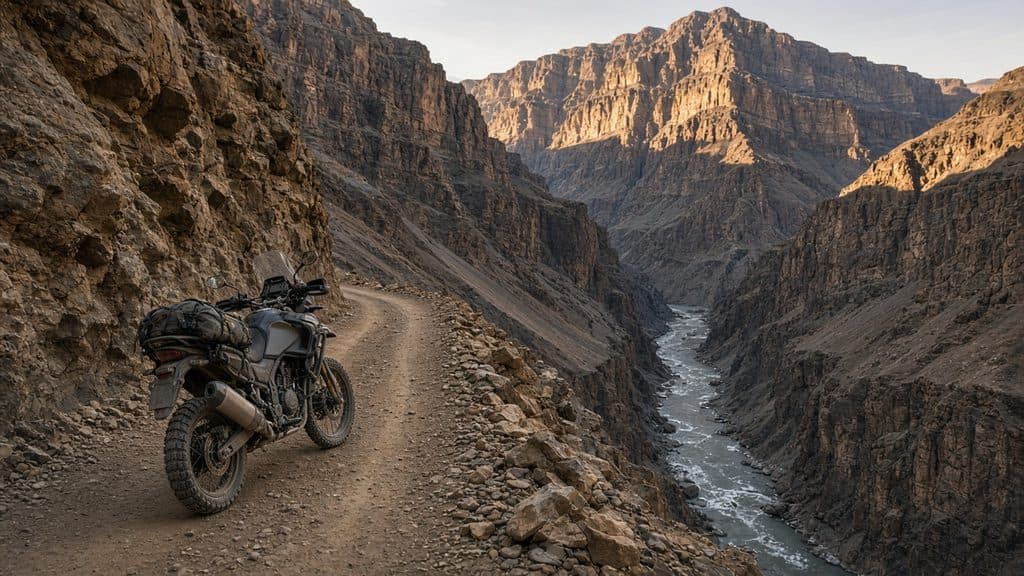
Zanskar is a high valley system south of the Indus, administratively part of Ladakh, geographically its own world. Padum is the centre. For years the motorcycle way in was the long road from Kargil over Pensi La, or a rough seasonal track that only made sense to people who already had time and a taste for it. Newer road-building over the high ground between Lahaul and Zanskar, including the Shinku La corridor toward Padum, has changed which weeks are realistic. It has not changed the character of the place. Distances are still long, villages are still far apart, and a road on a map is not the same thing as a road you would ride after a storm.
Leh remains the gateway for acclimatisation, supplies and a proper meal. Treating Leh as the destination and Zanskar as a half-day detour is how people end up tired in a town they did not understand. Divine Zanskar + Leh is a fifteen-day Himalayan motorcycle expedition because Padum needs time of its own.
Why riders add Zanskar after they already know Ladakh
The Manali–Leh highway is magnificent and, in July, busy. Nubra and Pangong are magnificent and, in July, busy. Zanskar is where the traffic falls away. The scale of the walls changes. A day can be a few villages, a river, and a road that alternates between new cut and old dust. People come back talking about the quiet more than about any single pass, which is a reliable sign they were in the right valley.
It is also less forgiving of a casual plan. Fuel, a bed and a meal are not things you want to improvise at 7 pm after a slow afternoon. A guided Zanskar tour puts those decisions with a crew that rides this country for a living. You still do the riding. Someone else absorbs the argument with the day.
The summer window, without the folklore
Zanskar opens later and closes earlier than the main Ladakh highway. May through August is the band Hardev publishes, and the middle of that band is the safest bet. Early May can mean snow on the high ground between Lahaul, Zanskar and Leh. Late August can already feel like autumn once the sun leaves the valley. June and July are the months to choose if your dates are fixed and you do not want to spend the first morning waiting on a report.
A listing that offers the Padum motorcycle route in October is telling you a story. The Indus valley around Leh can still be pleasant then. The high connections into Zanskar are a different climate. Ask which specific road the departure uses that week, and ask what happened the previous week. A good operator will answer both.
What the days feel like
Mornings are cold even in July. You will put a warm layer on at the bike and take it off two hours later, then put it on again on the next climb. Daily distances look modest on paper and feel long in the saddle because the surface keeps changing and because you are high. This is not a place to discover that you dislike slow riding. If your idea of a good day is 400 kilometres of sealed highway, stay on the Manali–Leh main line and enjoy it. If a good day is 140 careful kilometres and a quiet evening, you are in the right brochure.
Altitude still rules the first days. Coming from Manali you have already climbed. Do not add a maximum-height excursion on the same afternoon you arrive in a new valley. The fifteen-day length exists so the itinerary can be dull in the right places: a night that is only for sleeping, a morning that starts late, a walk in Padum that is not attached to a riding target.
Padum and the riding around it
Padum is a small town with a big job. It is where you rest, fix a strap, and decide which side valley is worth the afternoon. The monasteries and villages of Zanskar are the reason to stay more than one night. Riding in, taking a photograph of the river, and riding out is the tourist version. Staying long enough to walk somewhere without the helmet is the rider’s version, and it is the one that justifies the fuel and the permits.
The Royal Enfield Himalayan is the correct motorcycle. Ground clearance, a usable first few gears, and a workshop in Manali that already stocks the model matter more here than brand romance. Luggage should be soft and limited. A bike that is top-heavy with hard cases is a worse companion on a rough climb than a bike that looks less equipped in the photograph.
How this differs from a standard Leh trip
- More days, and those days are not optional padding.
- Fewer famous viewpoints per hour, and more empty road.
- A narrower season. May to August, with June and July the core.
- Less choice of hotels, and more need for a crew that booked ahead.
- A higher chance that weather edits the route. A good guide edits with it. A rigid PDF does not.
If this is your first Himalayan motorcycle ride and you are already comfortable for a full day on a bike, a guided Zanskar departure can still be the one. Say that you are new to these roads. If you want the gentler introduction, ride Spiti Behind The Scenes or a shorter Manali-based week first, then come back for Padum when you know you like this kind of day. There is no shortage of future seasons.
Acclimatisation and the order of the valleys
The order of a Zanskar expedition is a medical decision disguised as an itinerary. You do not drop a rider from the plains onto the highest bed of the trip because the photograph is better on Tuesday. Coming from Manali, the road has already done some of the climbing, which is helpful, and it has also tired people, which is not. The nights immediately after a big gain should be for sleeping and eating, with the riding the next day starting later than the keenest person in the group would like. Padum is where that patience pays. If someone feels worse on the morning you planned a side valley, the side valley waits. The valley will still be there in the afternoon, and it will still be there next year. The rider might not be, if you keep climbing out of pride.
Water, a salty meal, and a refusal of the celebratory drink are the unglamorous tools. So is telling the truth at the briefing. ‘A bit of a headache’ is useful information. ‘I’m fine’ when you are not is how a group loses a day it could have saved by descending two hundred metres and trying again tomorrow. Divine Zanskar + Leh is long enough to absorb that sort of honesty. A compressed schedule is not.
Frequently Asked Questions
Is Zanskar included in a normal Manali to Leh tour?
Which months should I trust?
Is it suitable as a first big trip?
What is the listed starting price?
Will the road be the same as last year’s video?
Dates and prices for the coming season are on the 2026 fixed departures calendar. If you want a route built around your dates, tell the Hardev Motors team in Manali and they will plan the ride with you.