
Spiti Valley Motorcycle Tour: The Best Months, Road Conditions, and a 10-Day Plan
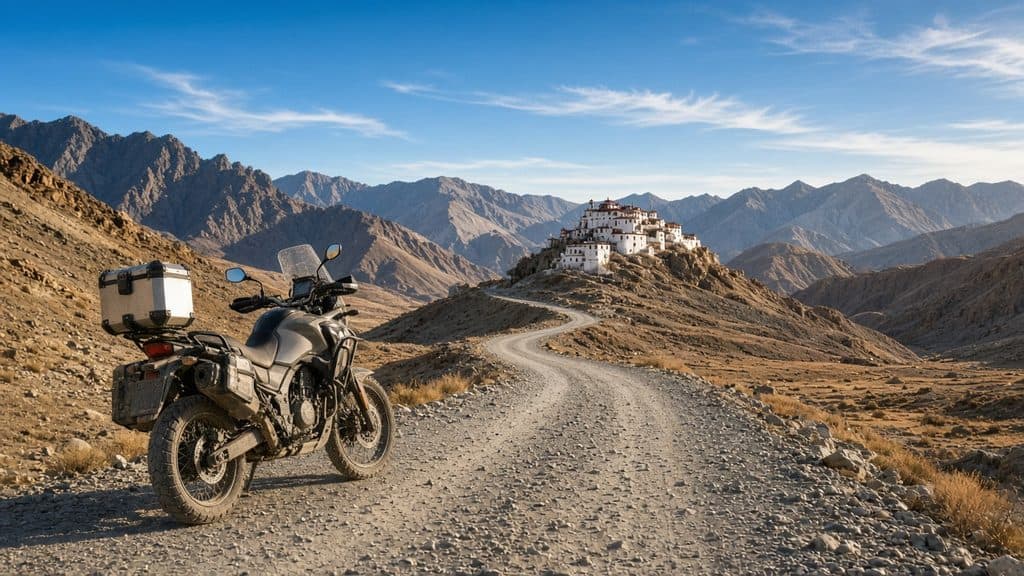
A Spiti Valley motorcycle tour rewards riders who like empty roads and high villages. This is the best time for Spiti, and a 10-day shape that actually works.
A Spiti Valley motorcycle tour is the cold-desert ride of Himachal: Kunzum La, the villages around Kaza, and a road that can be smooth at breakfast and a riverbed by lunch. Ten days is the right minimum if Kaza is the point, not a blur between two highways.
Hardev Motors runs this as Spiti Behind The Scenes, a guided Royal Enfield Spiti tour of about ten days, listed from 1,500 dollars, in the summer months on the 2026 calendar. This guide is the information you actually need before you book: how the valley is shaped, which villages are worth the side road, what the weather does, and how to tell a real plan from a rushed transfer with monasteries attached.
The shape of the valley
Spiti is a high, dry valley in the rain shadow of the main Himalaya. The Spiti river runs roughly from Kunzum toward the Sutlej, and the inhabited world sits on fans of gravel under enormous bare mountains. Kaza, at about 3,600 metres, is the district centre and the only sensible hub. Everything riders come for is a day ride or a night away from Kaza, not a suburb of Manali.
The usual motorcycle approach from Manali crosses the Atal Tunnel into Lahaul, continues to Gramphu, and climbs Kunzum La, about 4,550 metres, before dropping to Losar and then Kaza. Kunzum is the gate. When it is open and the road below Batal is not a mess of fresh slides, the valley is in season. When Kunzum is shut, no amount of enthusiasm in Manali creates a Spiti bike trip from that side. The Shimla and Kinnaur approach, via the Sutlej and the road through Nako and Tabo, is the other door, and it has its own closure problems in heavy rain.
A ten-day Royal Enfield Spiti tour that makes sense
Day one should be Manali, the bike, and a short shake-down, not Kunzum. The approach from Manali to a night in Lahaul is enough. Crossing Kunzum the next morning, while you are fresh, is how you arrive in Losar or Kaza able to enjoy it. Two or three nights around Kaza are the heart of the trip. Use them. A plan that reaches Kaza at dusk and leaves at dawn has not visited Spiti. It has transited it.
The return can retrace to Manali, which is simpler if the group has a fixed end date, or exit through Kinnaur toward Kalpa and Shimla, which adds a greener, lower, busier mountain road and needs at least one extra day if it is not going to feel like a forced march. Ten days fits the Manali–Kaza–Manali version with the villages included. It does not fit Kaza, Pin Valley, Chandratal, Kalpa and a rest day in Manali. Add days rather than cutting sleep.
The Kaza motorcycle route, village by village
Key Monastery sits above the river on the way toward the west of Kaza and is the picture most people already have. Go early or late. Midday in July is a car park with robes in it. The side valley north of Kaza is where a Spiti Valley motorcycle tour becomes specific: Langza, with the Buddha and the view of Chau Chau Kang Nilda; Komic and Hikkim, among the highest villages you will ride to; Kee and Kibber if the road is behaving. These are short distances and long little rides. The road surface, the wind, and a herd of animals will use the time you thought you had saved.
Chandratal, the moon lake, is a detour off the Kunzum approach, not a sight you collect between two passes without getting off the bike. The walk from the road to the water is part of it, and the night up there is colder than Kaza. Pin Valley is the other worthwhile day, narrower and quieter, and it should be a plan of its own rather than an afterthought when someone is already tired. Further down the Spiti river, Dhankar and Tabo justify a night if the itinerary is exiting toward Kinnaur. Tabo’s monastery is older and quieter than the Kaza circuit, and the altitude is kinder.
Best time for Spiti
The best time for Spiti on a motorcycle is late June through September. Kunzum has to be open, and the side roads around Kaza need to be more than a line on a map. July and August can still bring heavy rain on the Manali approach and around Batal even when the valley itself is dry and bright. That contrast fools people. You can ride in sunshine from Losar to Kaza and still lose a day to a slide on the way home.
September is the month many returning riders prefer. Mornings are cold, the light is clear, and there are fewer convoys. Early June is a gamble on snow at Kunzum. October is often too late for a relaxed crossing, though the lower valley can still be beautiful if you are already inside it. Match the month to the door you plan to use, and ask Hardev what the road did the week before you enquire, not what it did in a blog from 2019.
Roads, fuel, money and signal
Expect tarmac, gravel, short broken patches and the occasional wet diversion. The Himalayan handles this if you are not in a hurry. A heavier cruiser makes every rough kilometre longer. Fuel is available in Kaza and not in the romantic village you have chosen for sunrise, so leave Kaza with a full tank before a side-valley day. Cash still matters. A card machine in a homestay is a pleasant surprise, not a system. Signal exists in Kaza in a moody way and disappears on the side roads. Download the maps before Manali, and tell someone your plan the old way, at breakfast, with the guide.
Food is simple and good if you stop expecting city menus: dal, rice, noodles, momos, tea. The altitude dulls appetite at first. Eat anyway. A light headache on the first night in Kaza is common. A worsening headache, nausea or confusion is a reason to tell the guide and stop climbing, not a reason to push on to Komic because the photograph is famous.
How a guided departure changes the week
On your own, Spiti is absolutely possible and regularly done. The tax is logistics: which homestay still has a bed, which side road was chewed up yesterday, and what to do when the Kunzum report changes at noon. Spiti Behind The Scenes exists so those decisions belong to people who are already in the valley every season. You still ride every kilometre. You do not spend the evening phoning five guesthouses from a windy ridge.
Tell the team, when you enquire, whether you have ridden in the mountains before. A calm rider with ordinary touring miles can do this trip. A rider who has never filtered traffic or stood a bike up on gravel should say so. The group is happier when that is known in Manali rather than on the first broken corner above Batal.
What the evenings in Kaza are for
Kaza is not an attraction you tick. It is the workshop, the bakery, the fuel, the ATM that might work, and the only place on the trip where you can afford to have a slow evening. Use one night to do nothing on the bike. Walk the main street, buy the nuts and the fruit you will want on tomorrow’s side road, and look at the mountain that will be in every photograph so you stop being surprised by it. A second night is for the village you did not reach because the wind came up. Spiti rewards the rider who keeps a spare afternoon.
Homestays and simple hotels are part of the information, not a downgrade. You are at 3,600 metres. Heating is a blanket and a stove, water may arrive in a bucket, and the family cooking dinner has already done a day’s work. Be a polite guest. Shoes come off where they ask. The price of the room is not a licence to rearrange the house. In return you get the version of Spiti that a camp on the highway never quite manages: a kitchen, a conversation, and a morning that starts when the valley starts, not when a convoy horn does.
Frequently Asked Questions
Is ten days enough for Spiti?
How bad are the roads?
Do I need to be an experienced off-road rider?
Is Spiti a good first Himalayan ride?
What does the Hardev departure include as a starting price?
Dates and prices for the coming season are on the 2026 fixed departures calendar. If you want a route built around your dates, tell the Hardev Motors team in Manali and they will plan the ride with you.